

Categories
Friday update real estate blogPublished November 8, 2026
First Friday Update November 6, 2026

Hooray! The mid terms are behind us and our whole lives are still ahead of us.
The market, regardless of what market it is, hates uncertainty. Doubt gets priced into either higher rates or lower demand and higher hesitation. The bond market for sure blew off a little doubt right through and especially after the mid terms. 10 year bond yields came down from around 5.3% to about 4.8%. While these aren't attached at the hip to mortgage rates, rates on borrowing for housing dropped some as well.
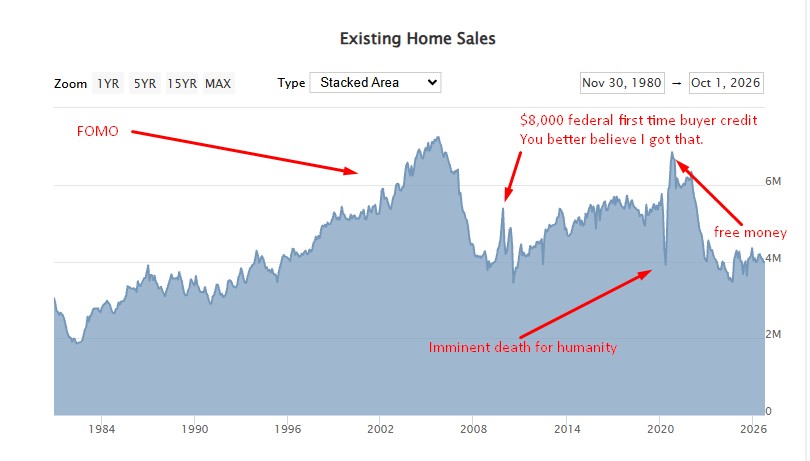
Existing home sales at a national level look a whole lot like this.
It's a buyer's market here in Colorado Springs without a doubt and in much of the nation as well. There are parts of the country where the market is more in the seller's favor but that's not on the front range of Colorado.
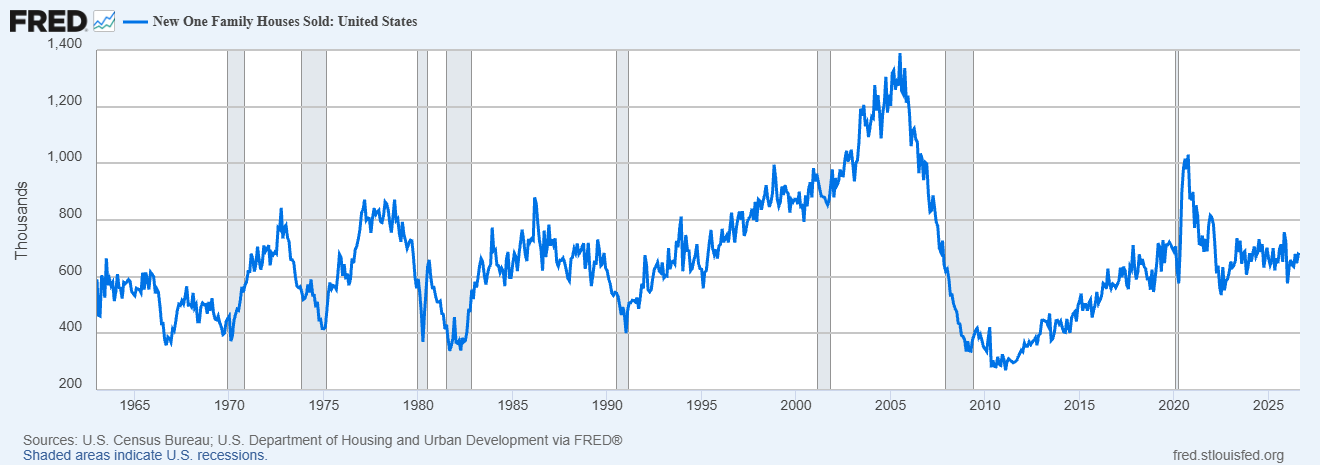
New home sales nationally are at maybe 60% of what they were 5 years ago. Based on permit numbers in the Pikes Peak region we're probably closer to half or maybe a little less than half of the volume at the 2021 peak yet nowhere near the 2010 bottom.
Let's focus on supply. Last year going into the second week of November we had 2,419 existing single family homes on the market in El Paso County. Today we have 2,565. All things considered that is a fairly modest gain in inventory especially with the run up in rates since February.
Last year October showed us a median sold price of $472,000 and this year we're at $460,000 on 733 sold units. Last year October had roughly 10% higher sales volume at 791 units. This is a trivial drop in price on the surface level but you need to remember that the average doesn't show the personal stories. There are plenty of people right now stuck in their houses, upside down on their mortgages and many are starting to let the houses go.
Looking at my Friday update from a year ago I went on a tangent about foreclosures then. 2024 YTD had 450 foreclosure starts. 2025 YTD had 807. And so far this year we're at 678. This is nowhere near 2010 levels and is honestly fairly surprising. The relatively modest foreclosure numbers don't really tell the whole story of distressed inventory though.
One thing that is a bit different about this go around in my opinion is who owns the distressed houses. 2007-2012 saw a whole lot of Americans losing their homes with those private losses turning into foreclosures that dragged down neighborhood comps. While that is now again happening as it should and does in any normal market (foreclosure moratoriums are not normal is what I'm saying) the truly significant losses are hitting corporate interests much more obviously.
Companies like Home Partners of America for example. This company was a fantastic buyer of homes from about 2018 to 2022. They got famous with our local agents for being very eager to buy. They would compete on price, they would not take inspections seriously and they would close. I loved selling houses to HPA because they were the sucker that every seller dreams of.
Now they are not only not buying but they're selling. Last week I pulled some comps to help one of our agents in a very confined area, maybe a half mile radius. In that circle I saw 3 homes being sold by HPA at an average loss of $70,000-100,000 per house. From what I can tell they hold at least 600 houses in El Paso County still even after selling them off over the last 3 years.
On the one hand a large company fire selling properties isn't great for neighboring comps. Decreasing values even if it's only by a few percent keeps regular people stuck or worse. However the fact that it's mostly not individual home owners failing is indeed encouraging. And prices getting pulled down by corporate sellers does indeed help regular working people find opportunities to jump into home ownership. So while it's not all rosey and fun to see property values drop around you keep in mind that the losses of soul less corporate giants are creating opportunity for normal everyday people.
I see that as a substantial win.
I feel like we have maybe a couple years of softening market ahead of us but I'm really uncertain about that because of this graph.
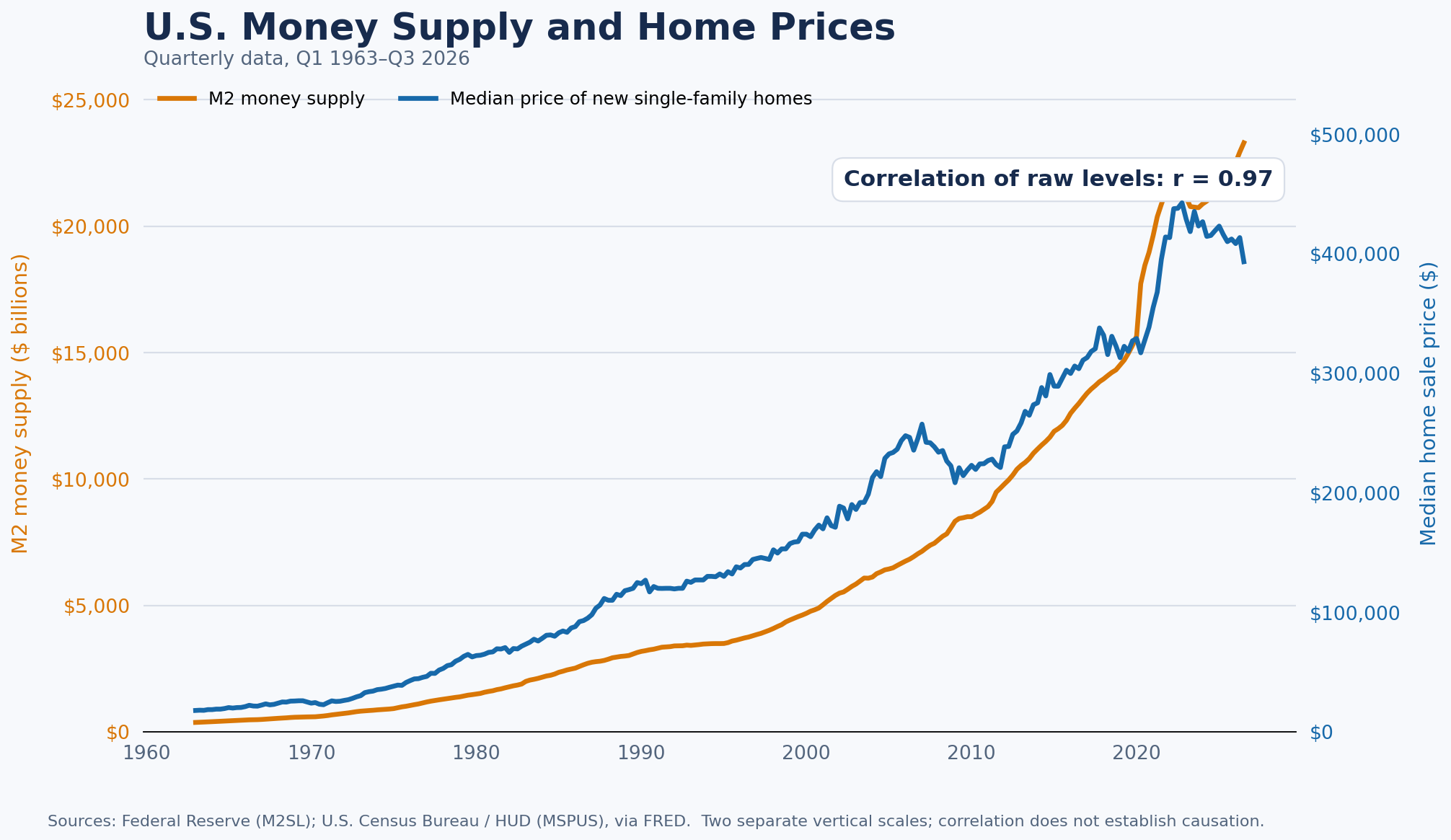
The correlation between M2 money supply and median home pricing is stronger than most correlations in economics. The amount of money in the system goes up and so does the cost of housing as well as most goods and services. That is what makes housing an inflation hedge by definition.
This graph also helps answer a question that many Americans on social media really struggle with. The question being if sales levels are at the lowest point since 2008 how come prices aren't at 2008 levels? Well, why isn't a pint of beer $2 or a burger $8? And more importantly for the people standing by that question like its the hill to die on why aren't they willing to work for $15/hour like they used to?
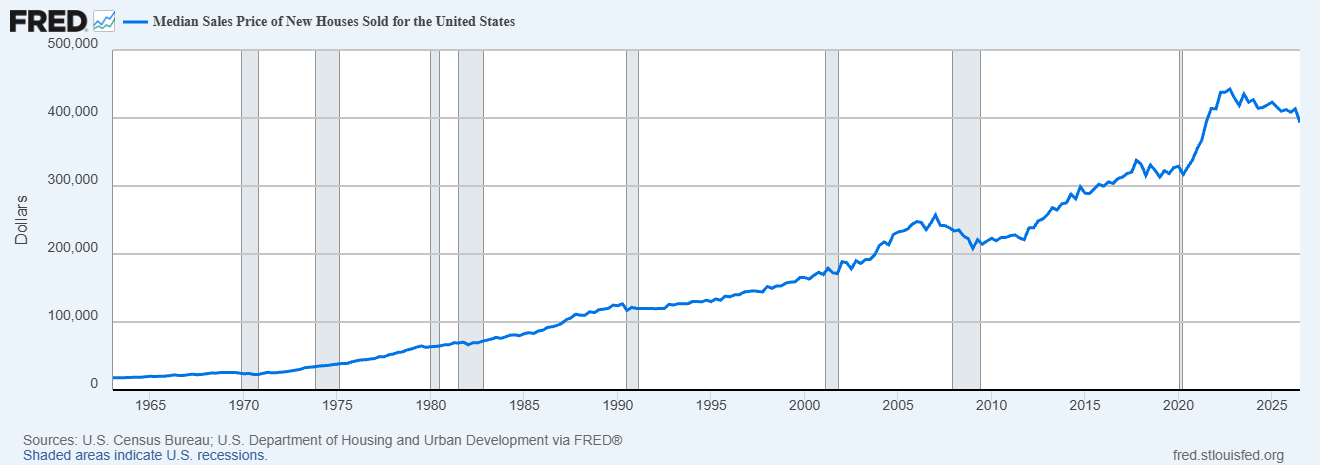
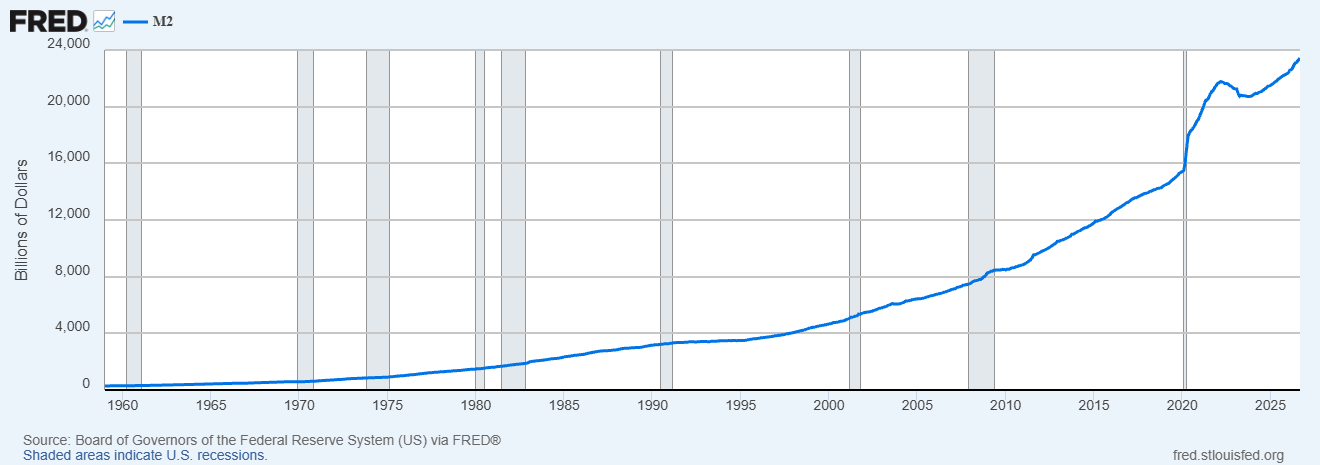
Let's combine these two number pictures.
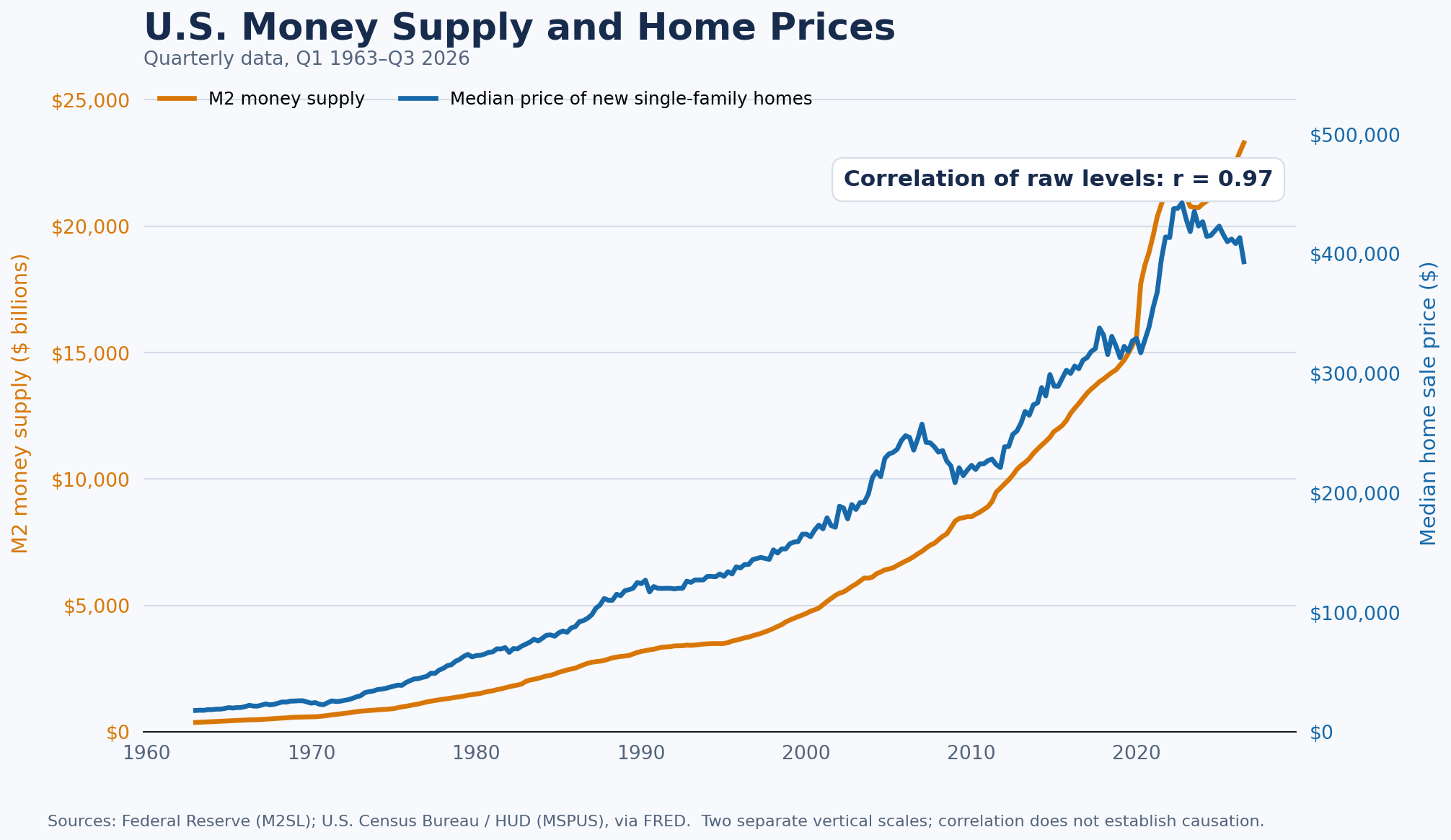
Notice how around 2010 the orange line slowed its ascent and prices flattened there? Then the dip in the orange line in 2022 and the associated price drop happening now? What do you think will happen to the blue line as the orange line continues to shoot up towards 30 trillion USD?
What I saw and felt going into my real estate career back in 2012 was a big reluctance from people to buy a dip in housing. 2012 was an amazing opportunity to buy a home and as we can see on the first graph I shared people would much rather follow the masses to a financial ass whooping than take advantage of a buyer's market. People are roughly 50% more likely to FOMO in than they are to buy a dip according to that graph showing us the last 46 years of the market. I don't think that's unique to housing and it's just a natural phenomenon.
My take on the market is the same as it's always been. If your alternative is renting and you intend to live here for the foreseeable future you should look for a way to buy a house. You should buy something that is comfortably within your budget and something that you can easily rent out to cover your mortgage payment. You should not rely on prices continuously rising or interest rates dropping to make your initial purchase make sense.
You should buy property you can comfortably afford at the closing date and then take advantage of the luck that sitting on an asset over time can offer you. Ride out the bad luck having a place to live, take advantage of the good luck on refis or selling for fat gains when that happens.
Let me give you some fun anecdotal examples from the last few weeks of what this market is like.
House remodeled in 2021, listed for 330k, bought in 1 day for 345k. Now sitting on market for 18 days as a VA foreclosure at 215k with no buyers. Shows like shit and smells like it too.
Same neighborhood, grandmas house. Needs all the cosmetic stuff but has new windows and HVAC. Listed at 220k goes under contract over list on multiple offers because after about 25k worth of work it will be a nice and cozy home.
Many, many houses are missing the strike point by about 7-10% just lingering on the market with sellers reluctant to accept that this isn't 2021 anymore. These houses would absolutely move if the sellers met the buyers where they're at, because there are indeed buyers actively buying in this market.
I think we're getting there now really. We're getting to the moment where buyer demand is low enough and supply is high enough that opportunities to snag houses will become more and more common. It just takes a long term vision and a glance at the orange M2 line on the graph above to help it all make sense.

Admin SRG
| Summit Ridge Group LLC
or another way